
Hand Emergencies
+33 4 94 03 07 07
The Toulon Hand Center provides SOS Hand emergencies 7 days a week.
A hand surgeon is present at the center from 8:00 am to 7:30 pm, Monday to Friday, and from 9:00 am to 7:00 pm on Saturdays and Sundays.
After the center closes, a surgeon from the team is available on call by phone.
In case of a hand injury, you can:
Call the SOS Hand emergency number: +33 (0)4 94 03 07 07.
A surgeon will advise you on what to do (this may save you a long and unnecessary wait).Go directly to the SOS Hand Emergency Unit at Saint Jean Private Hospital, with someone to accompany you.
Call the SAMU (dial 15 in France), where you will be directed according to the severity of your injury.
What to do in case of a hand injury
- Do not panic! Hand injuries often look dramatic, but they are rarely life-threatening.
- Call the SOS Hand center or the SAMU (15) to receive proper guidance.
- Do not apply a tourniquet.
- Keep your hand elevated.
- Do not eat, drink, or smoke, as this could delay possible anesthesia. Note the time of your last meal or drink.
- Remove rings and bracelets before the injured hand swells.
- Go to the emergency unit with someone to accompany you.
In case of a wound
Wash the wound with water and Marseille soap.
Apply a dressing (or, if unavailable, use a clean towel) and keep the hand elevated.
In case of amputation
NEVER PLACE SEVERED PARTS DIRECTLY IN CONTACT WITH ICE.
Gather all severed parts in a compress and place them in a waterproof plastic bag.
Seal the bag and place it in a container with non-synthetic ice. The closed bag should float on the iced water like a buoy.
Wrap the amputated end with a compressive dressing. Keep the hand elevated. Do not apply a tourniquet.
Never discard a fragment, even if it seems damaged. The surgeon may be able to use some components.
In case of burn
For a chemical or thermal burn, place the hand under running water for 15 minutes.
Do not apply any product to the burn.
Apply a dressing (or, if unavailable, use a clean towel) and keep the hand elevated.
If the burn is very extensive or involves another part of the body besides the hand, call the emergency number (SAMU, 15)
In case of bite
Wash the wound thoroughly under running water with Marseille soap.
Apply a dressing (or, if unavailable, use a clean towel) and keep the hand elevated.
Try to identify the animal (or its owners, if it is a domestic animal) to verify its vaccination status.
In case of fracture
Immobilize the hand or the fractured segment on a rigid support without pressure (for example, place the wrist on a piece of stiff cardboard and secure it with a loosely applied bandage).
Keep the upper limb elevated.

+33 (0)4 94 03 07 07
How to get here
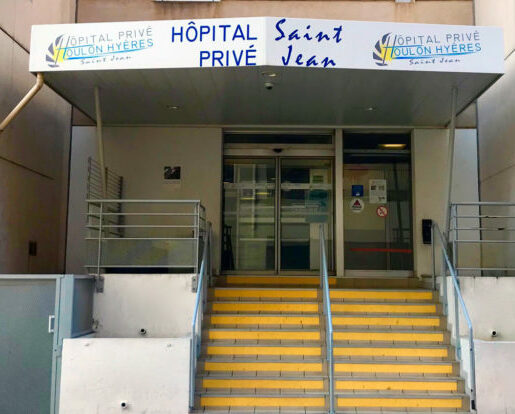
Hôpital privé Saint Jean
1 Av. Georges Bizet, 83100 Toulon
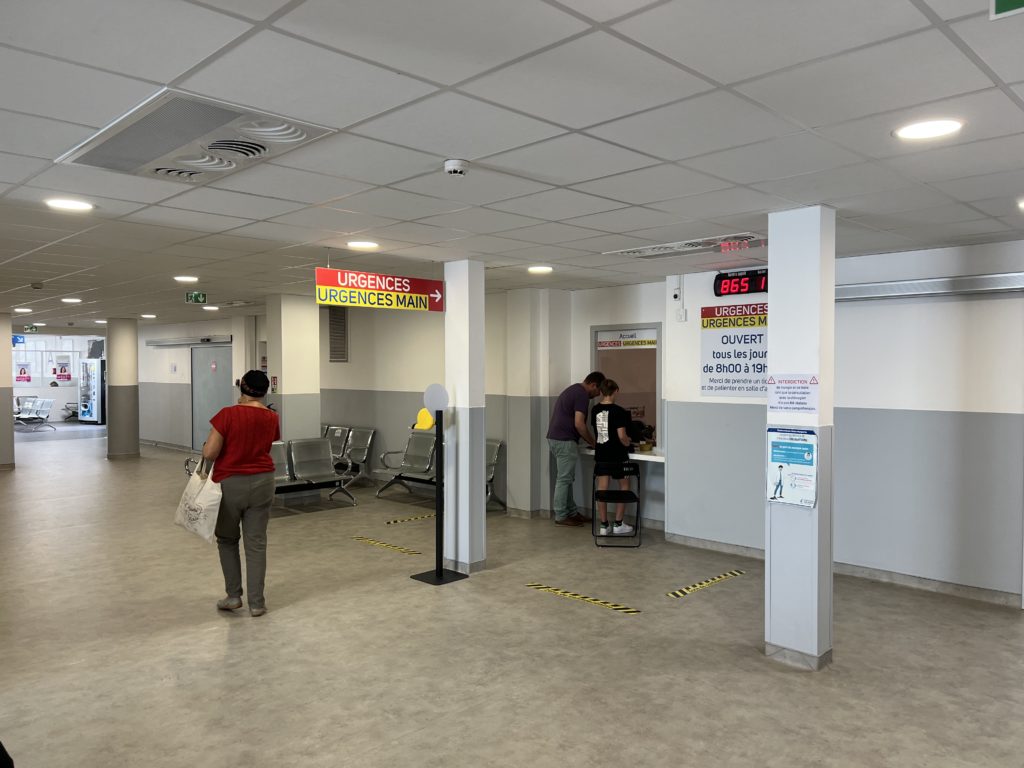
When you arrive, you must first register so that your medical file can be created.
You will then be directed to a surgeon who will examine you and assess your injury.
Additional tests may be carried out if the surgeon considers them necessary (X-ray, ultrasound, blood tests, etc.).
After this assessment, the surgeon will inform you of the diagnosis, the severity, and the need and urgency of surgical intervention, as well as the type of care (outpatient or hospitalization). The decision will take into account the severity of your injury, your family support, and your geographical distance.
If treatment is not surgical, the surgeon may prescribe painkillers, anti-inflammatories, a splint, physiotherapy, or sick leave.
You will be asked to complete a form including questions about your medical history, current treatments, allergies, and your consent for the procedure.
The surgeon will answer all your questions about the surgery and the expected recovery process.
You will then be taken to the pre-anesthesia room where an anesthetist will confirm there are no contraindications. The type of anesthesia will be explained to you: most often it is regional anesthesia (avoiding general anesthesia, which is heavier).
- A nurse will perform the first dressing to protect your wound and control bleeding, which is common in the hours following surgery.
Depending on the type of injury, a splint may be necessary and will be made by a hand therapy specialist.
You will be given:
- A detailed operative report
- Post-operative instructions (wound care, rehabilitation, splint use…)
- A prescription for painkillers and antibiotics if necessary
- A medical certificate for sick leave if necessary
- A follow-up appointment for post-operative consultation
After a short monitoring phase, you will either:
- Return to your hospital room (if admitted), or
- Go home with your accompanying adult (mandatory for all outpatient procedures).
How to get here
Hôpital privé Saint Jean
1 Av. Georges Bizet, 83100 Toulon